
CargoWise reporting coverage
CargoWise reporting across modules and companies.
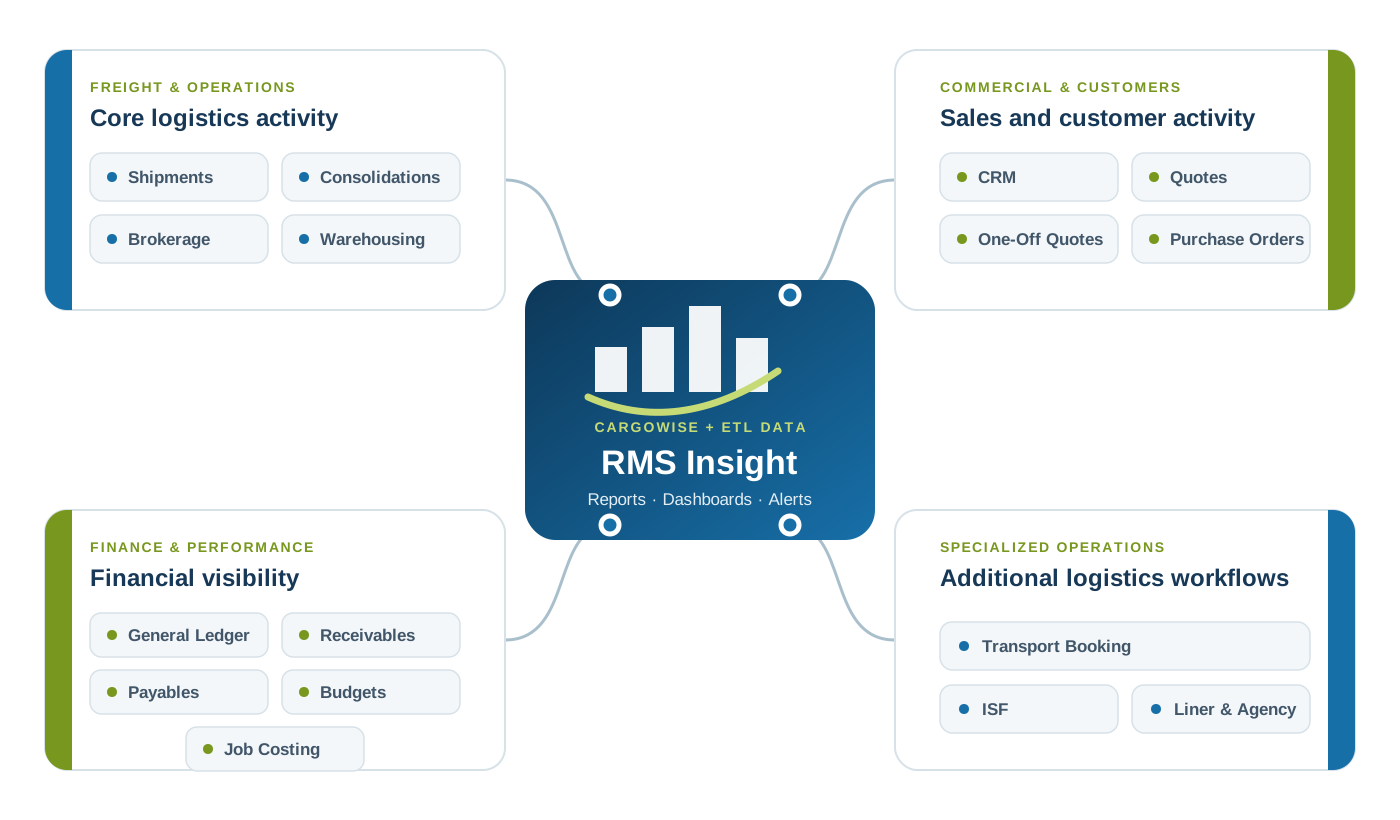
RMS Insight can use relevant information from the CargoWise modules and ETL data sources available in your environment—connecting operational, commercial, financial and specialized activity in one reporting foundation.
Your information comes from CargoWise. Your reports run on RMS.
RMS brings your CargoWise information into a separate reporting database. Your reports and dashboards use that database—not direct reporting queries against your operational CargoWise database.
Report within a module—or connect related modules.
Multiple-module coverage gives each team reporting for its area. Combined-module reporting goes further: RMS connects related records so selected information can appear together in one report, subject to available data and approved access.
One report can connect multiple CargoWise modules.
Building a report across separate CargoWise modules can be difficult because the related records belong to different workflows and data structures. RMS is designed to connect that approved information natively.
Follow the business relationship—not the module boundary.
RMS can relate operational and commercial records within a CargoWise company and, when configured and authorized, across CargoWise companies. Selected fields from each connected record can then appear together on the same row of a single report.
Connected module data. One report row. Clearer context.
Combine modules. Or see across companies.
Cross-module reporting connects related business records. Cross-company reporting brings approved information from multiple CargoWise companies into an authorized view. RMS can support either need, or both, according to the implementation.
Has the whole order been delivered?
For the supported order-delivery rule, RMS can derive an order delivery date when at least one linked shipment exists and every linked shipment has an actual delivery date. Source completeness and existing order dates still matter.
Customer evidence: AGS
In its customer story, AGS describes financial reporting and consolidation across 21 entities and branch locations, alongside operational reporting and KPI tracking.
Read Yoav Millet’s full customer storyTell us which records, modules and companies you need to connect. We will confirm available fields, relationships, access and refresh requirements for your environment.
One reporting foundation across the organization.
The following module coverage reflects the CargoWise and ETL areas represented in RMS reporting. Exact records and fields depend on each customer environment, configuration and approved access.
Freight and operations
- Shipments
- Consolidations
- Brokerage
- Warehousing
Bring movement, operational timing, customs and warehouse activity into reporting relevant to the teams managing the work.
Commercial and customers
- CRM
- Quotes
- One-Off Quotes
- Purchase Orders
Connect sales, quoting, customer and order information with the operational activity that follows.
Finance and performance
- General Ledger
- Receivables
- Payables
- Budgets
- Job Costing
Review financial measures and job performance alongside the operational records that provide context.
Specialized operations
- Transport Booking
- ISF
- Liner & Agency
Extend reporting to specialized logistics workflows when those areas are used and available in the customer environment.
Coverage is configured for each customer
RMS does not assume that every organization uses every CargoWise module in the same way. Reports, ETL processes and user access are aligned with the modules, data and permissions available for that implementation.
How CargoWise information becomes RMS reporting.
RMS provides a controlled path from source records to reporting experiences appropriate for different users.
CargoWise sources
Start with relevant operational, commercial, financial and specialized records available in the customer environment.
RMS ETL
Organize and prepare approved source information for the reports, measures and relationships the implementation requires.
Reports and dashboards
Present the information through focused summaries, charts, maps, tables and supporting detail.
Audience access
Give operations, sales, finance, managers and authorized customers the reporting and underlying records appropriate for them.
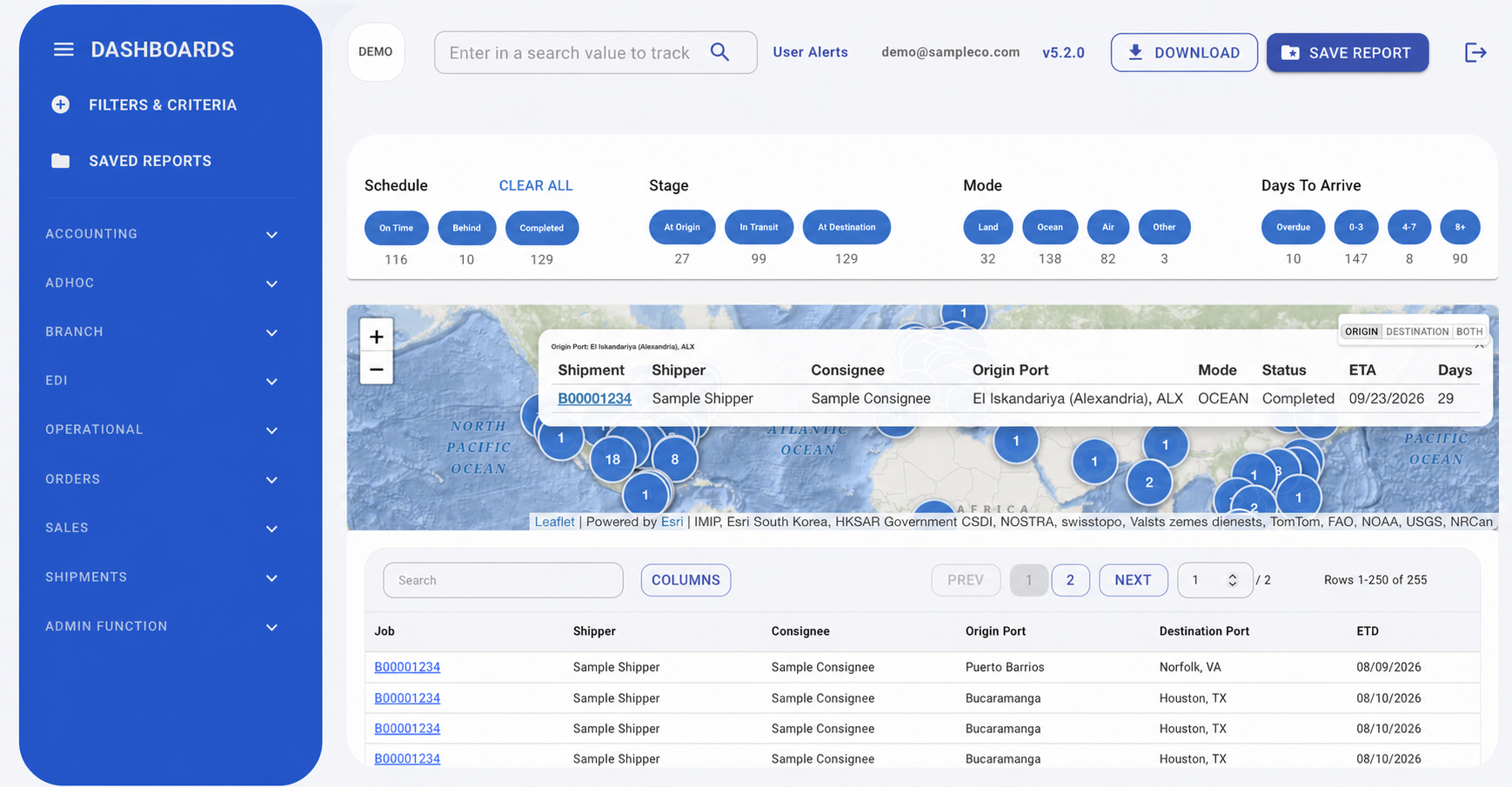
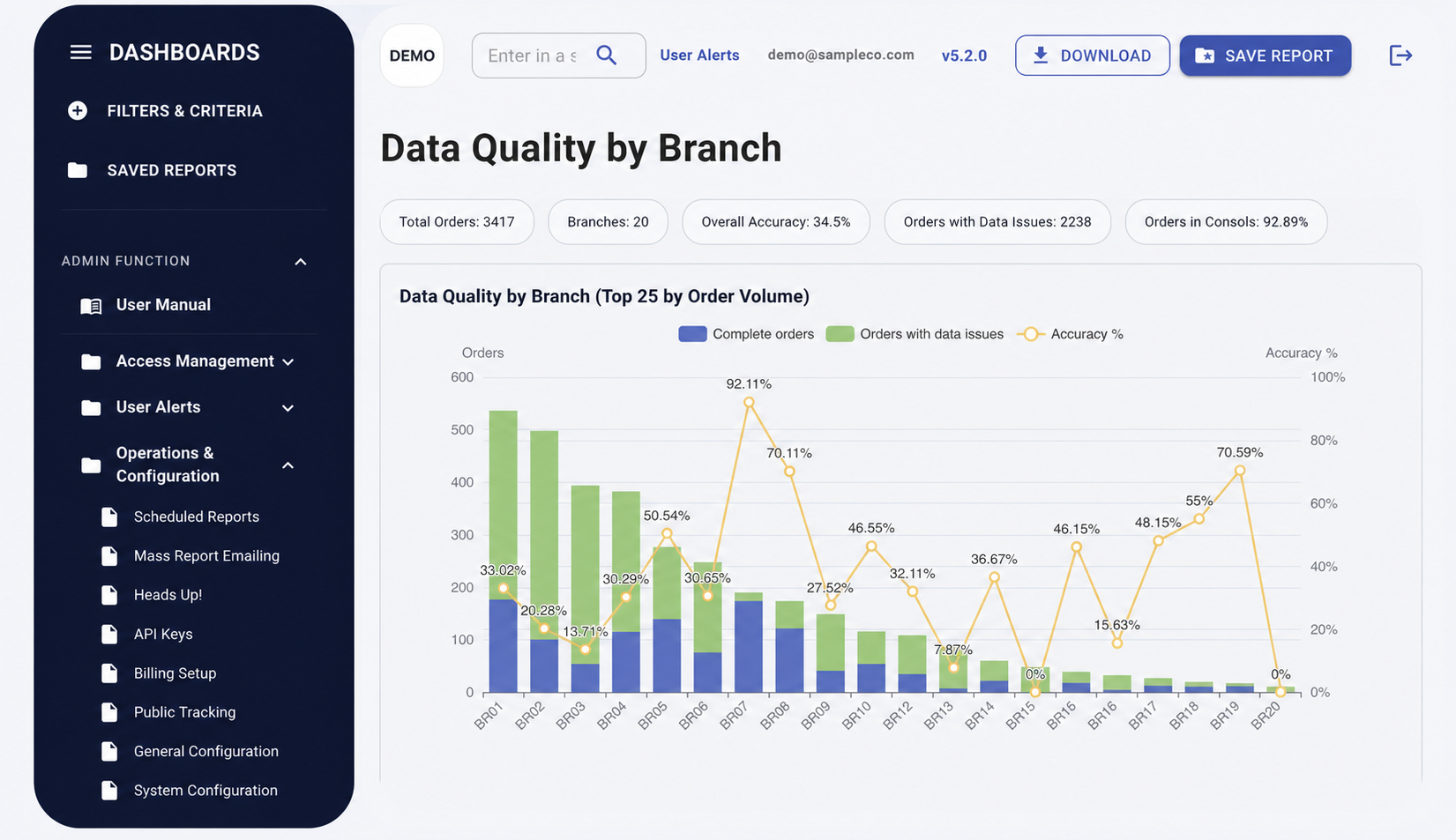
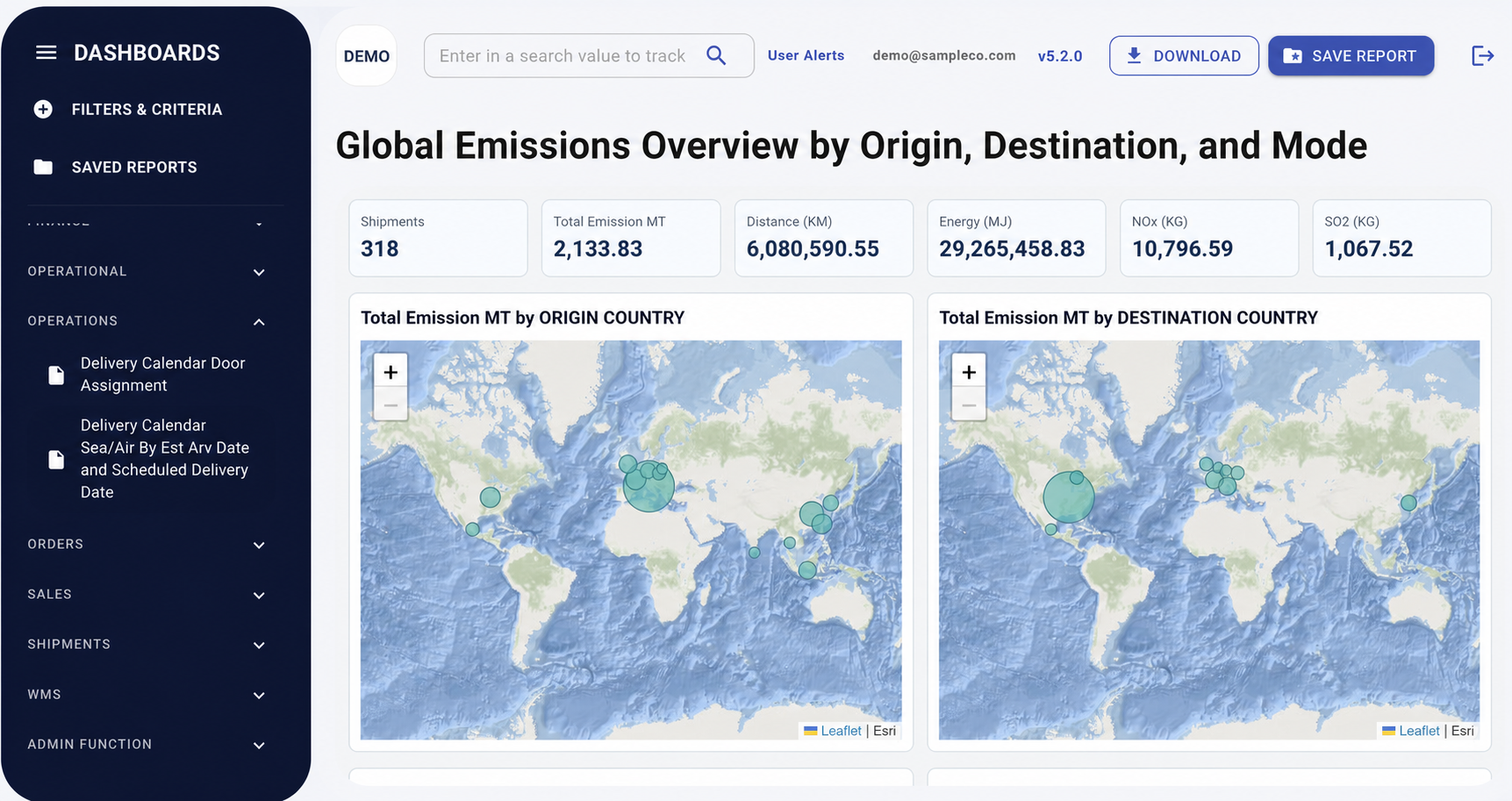
Reporting that connects summary and supporting detail.
These genuine RMS interfaces demonstrate how dashboards can combine measures, trends, geography and detailed records. Customer identifiers have been replaced with generic values.
Understanding CargoWise reporting coverage.
Does RMS only report shipment data?
No. Shipment reporting is one use case. RMS can also use relevant information from the other CargoWise modules and ETL sources represented on this page.
Does every customer receive the same data?
No. Available fields, records, refresh processes and reporting depend on the customer’s CargoWise environment, implementation and approved access.
Can reporting connect different business areas?
RMS ETL and reporting can organize relevant source information around a business question, subject to the data and relationships available in the implementation.
Can different audiences receive different views?
Yes. Reporting can be organized for operations, sales, finance, managers and authorized customers with appropriate report and record access.
What do you need to understand from CargoWise?
Tell us which modules your organization uses and which decisions your employees or customers need to make. We’ll demonstrate the RMS reporting approach relevant to your environment.